Who this service may be suitable for
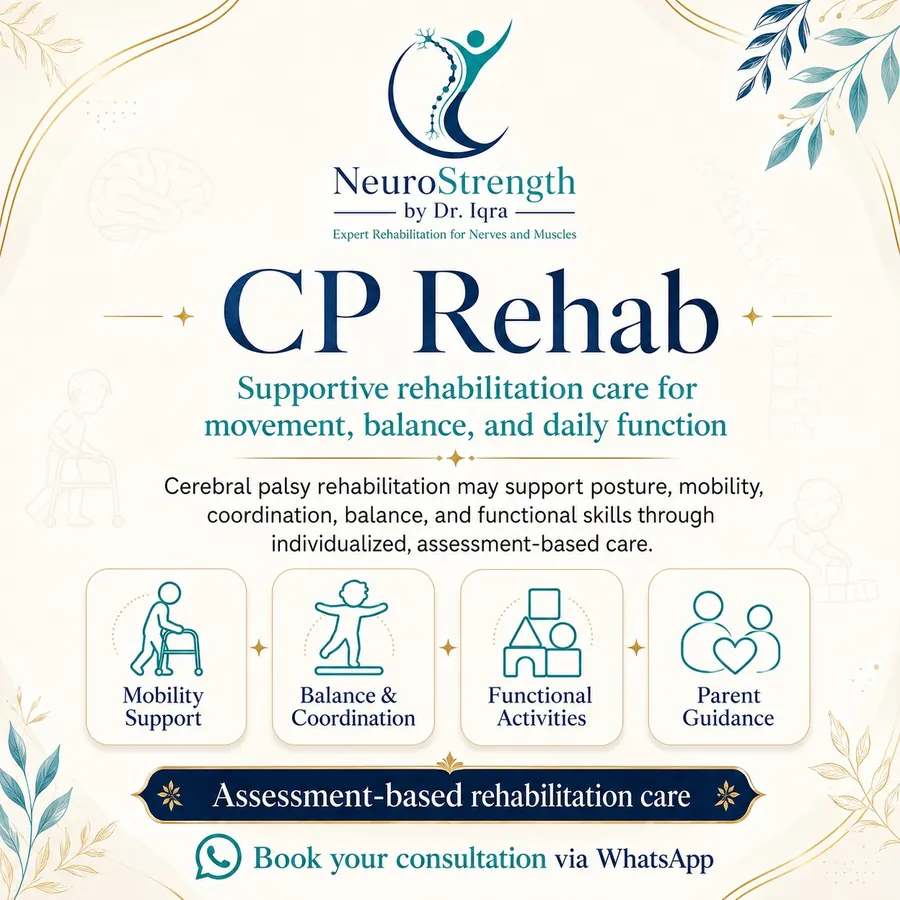
- Children with cerebral palsy or movement-related developmental needs
- Difficulty with sitting, standing, walking or transitions
- Balance, coordination or strength challenges
- Families seeking positioning and home activity guidance
- Children working toward practical participation goals
Function first
Pediatric rehabilitation is most useful when goals are connected to real life. For one child that may be improved sitting for play; for another it may be standing, walking with support, transfers, reaching, or participating more comfortably in school and family routines.
Assessment considers the child’s current movement, muscle tone, range of motion, strength, balance, equipment use and the family’s priorities.
Play, practice and repetition
Children learn movement through repeated practice in meaningful activities. Sessions may use play-based tasks, balance challenges, supported standing, stepping, transitional movements and age-appropriate strengthening when suitable.
Home activities are kept practical so they can fit into daily routines rather than becoming an unrealistic burden for the family.
Working with the wider care team
Children with cerebral palsy may benefit from coordinated input from pediatricians, neurologists, orthopedic teams, occupational therapists, speech therapists, orthotists and educators depending on their needs.
Physiotherapy should complement that wider plan. New pain, sudden loss of function, seizures or other acute medical concerns require medical review.