Who this service may be suitable for
- Women returning to exercise after childbirth
- Core and general strength rebuilding
- Postural or movement discomfort after delivery
- Reduced confidence with lifting, stairs or daily tasks
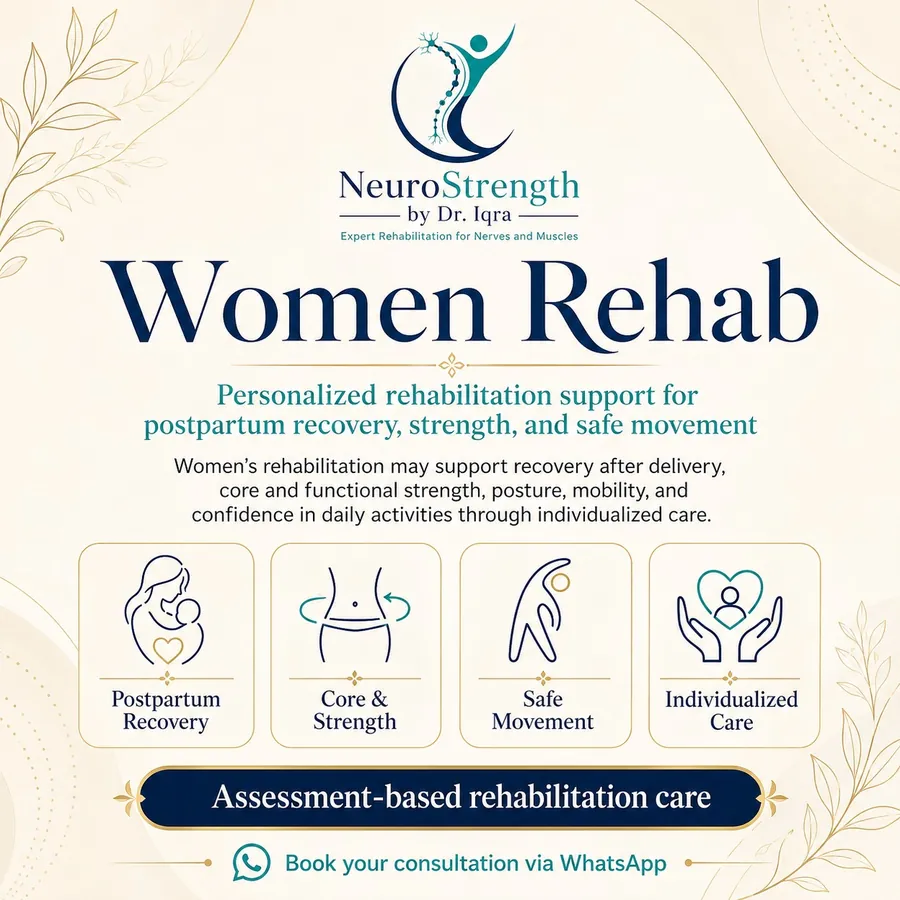
- A gradual, assessment-based return to activity
Recovery looks different for every person
Postpartum recovery is influenced by pregnancy, mode of delivery, sleep, feeding, previous activity, pain, medical factors and the demands of caring for a baby. A useful rehabilitation plan should reflect those realities.
Assessment may include general movement, breathing and trunk control, strength, mobility and the tasks that currently feel difficult. Pelvic-health symptoms may require referral to or collaboration with a pelvic health specialist when appropriate.
Gradual return to strength
Rehabilitation may begin with comfortable movement and basic strength, then progress toward lifting, carrying, squatting, walking, stair use and eventually more demanding exercise if that is the goal.
Progress should be based on symptoms and function rather than pressure to return to a pre-pregnancy routine on a fixed timeline.
When to seek medical review
Seek medical care for heavy or unexpected bleeding, fever, severe or worsening pain, calf swelling, chest pain, shortness of breath, wound concerns or other urgent postpartum symptoms.
Physiotherapy works best as one part of safe postpartum care, alongside obstetric or medical review when needed.